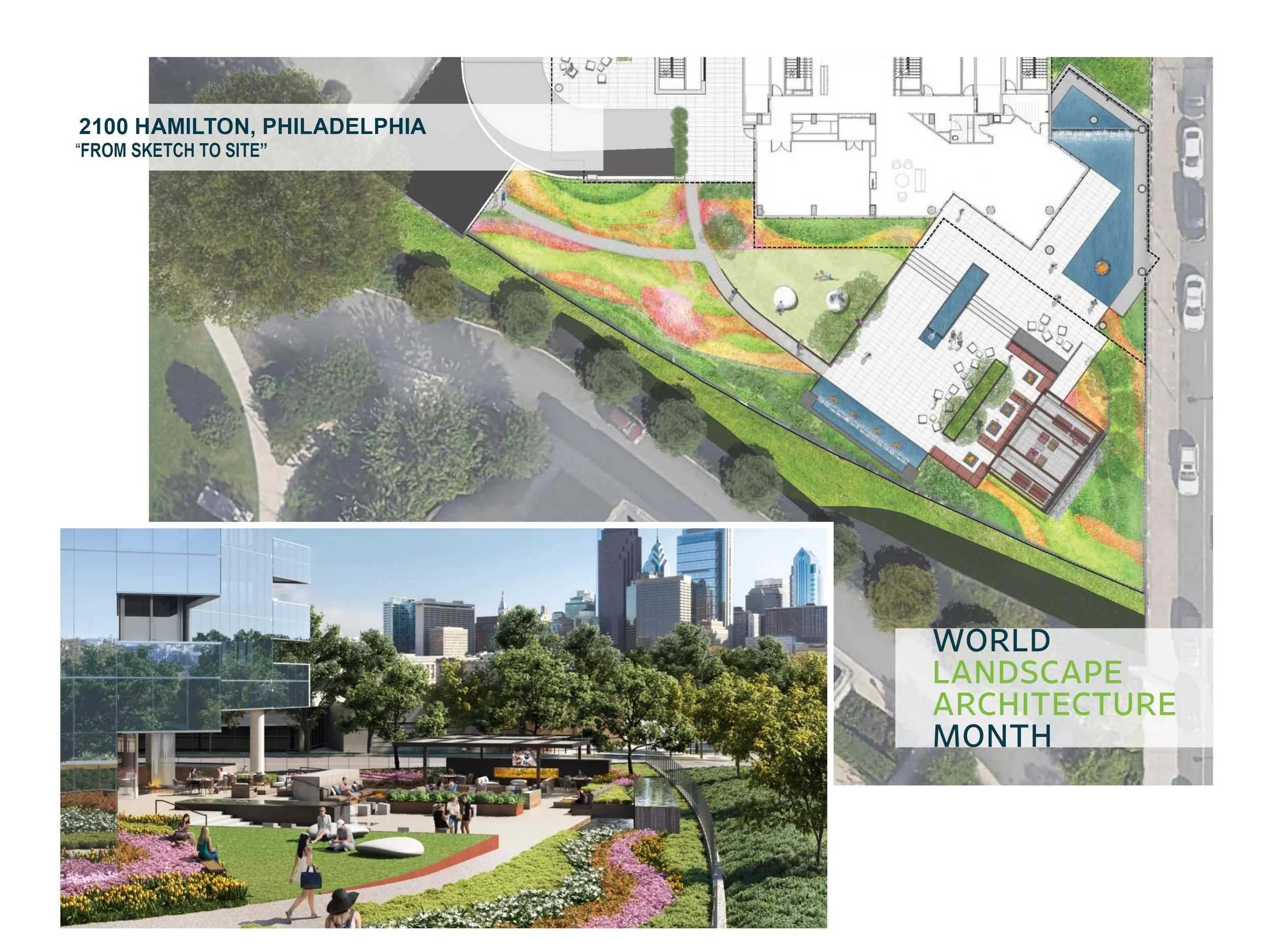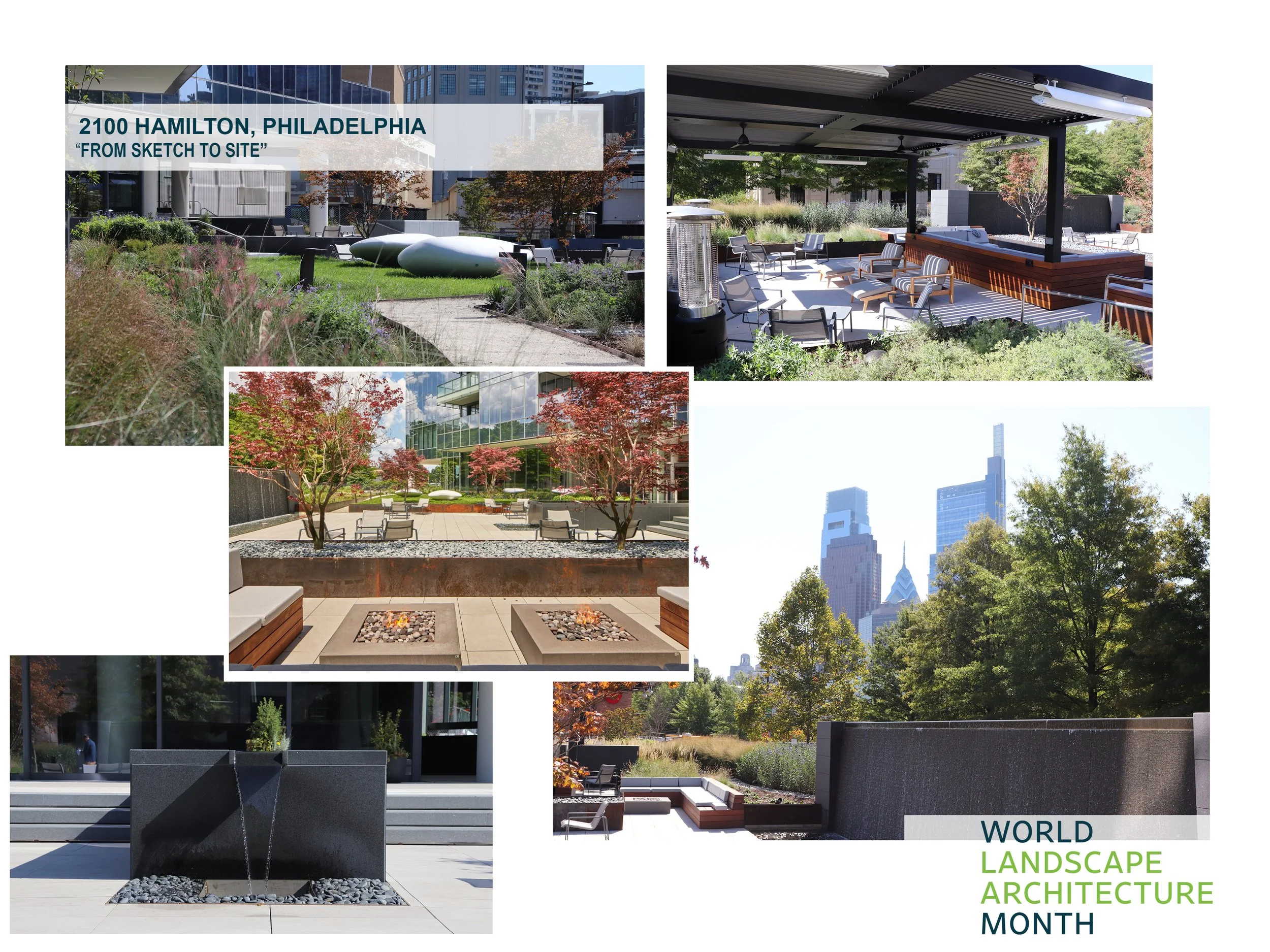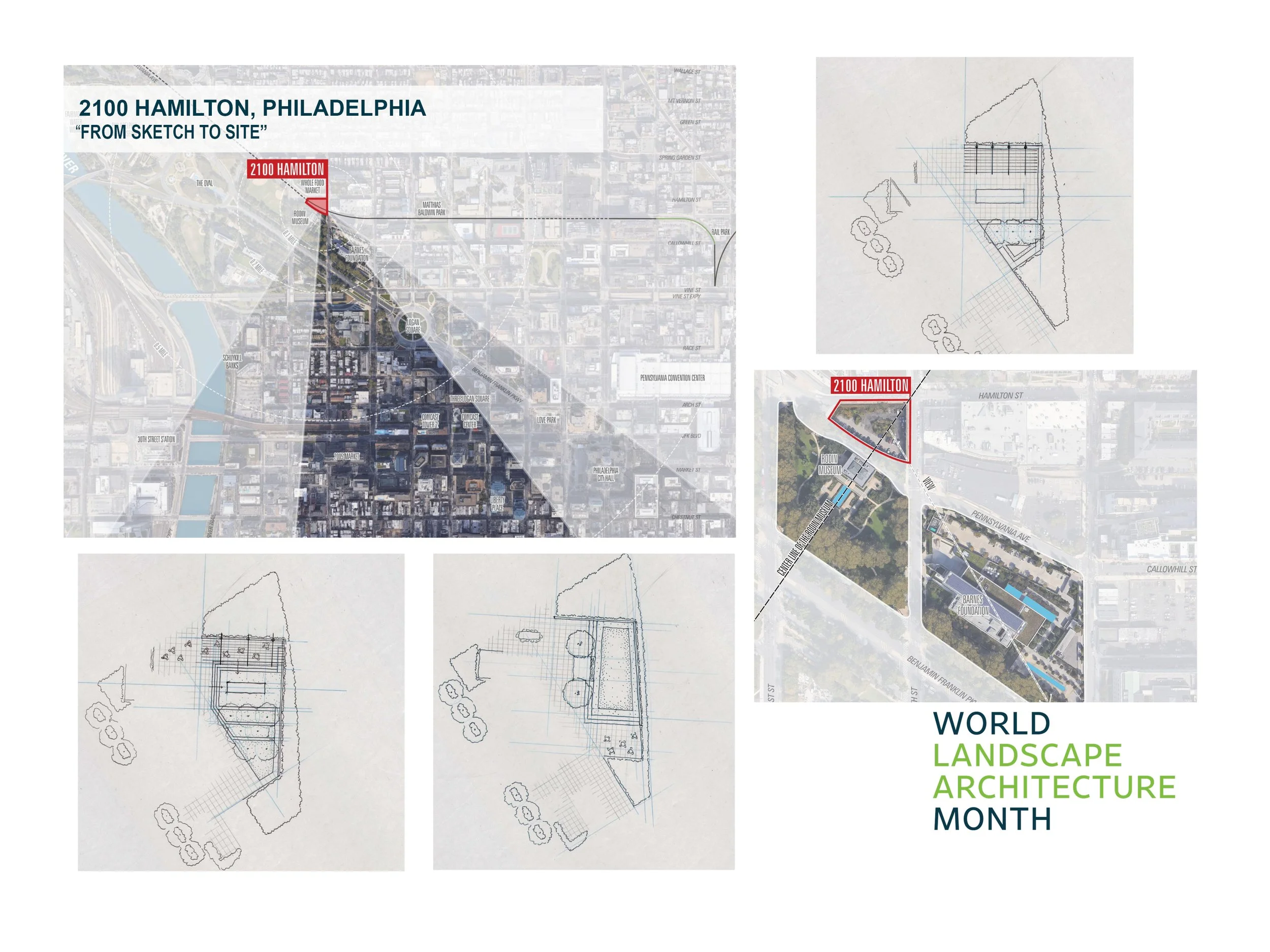
This project is the garden at 2100 Hamilton in downtown Philadelphia. We worked with the architect from the beginning of the project to design a unique garden space that provided numerous experiences within a compact footprint. These snippets of the work help illustrate the process of taking a new project from genesis to final construction.
In the first phase of all our projects, we undertake a thorough study of the site. We note key factors like location, context, client goals, and programming, as well as other factors such as sun and wind exposure which help guide the selection of plants that will thrive in any given site. While these studies can range from hand drawn markups of a survey to digital presentation graphics, the process of understanding a site is vital to every project.
The concept phase, or ideation phase, is where the trace comes out and the designers start to put pencil to paper to begin creating a plan for a site. Taking cues from the client’s needs, the site context and all the things learned studying the existing conditions we start to draw out early thoughts for a project. This is a time that we often have charettes in the office to generate a wide array of ideas that then get distilled down into an early concept plan.
In the next phase, the team focuses on taking all the work from the first phase and creating a more detailed set of drawings that help identify what areas of a design need further study. Materials for the project are selected and noted on plans and in specification documents, and we interact with suppliers and vendors to select the right products for the installation. As documents progress, there are milestones where all the consultants combine their drawings and review for continuity and accuracy. Each milestone brings another level of detail until the drawings, specifications and other materials are fully complete and reviewed by all team members.
The final phase that we are usually involved in is the construction administration phase. During this period, we coordinate with the contractors and other team members to ensure that all materials to be used on a project match what was selected during the final design phase. Contractors use this time to ask questions regarding specific items or for clarification on the intent of a certain element. Working closely with the contractors is essential to keep a project on track and to ensure the final product meets the whole team’s expectations.